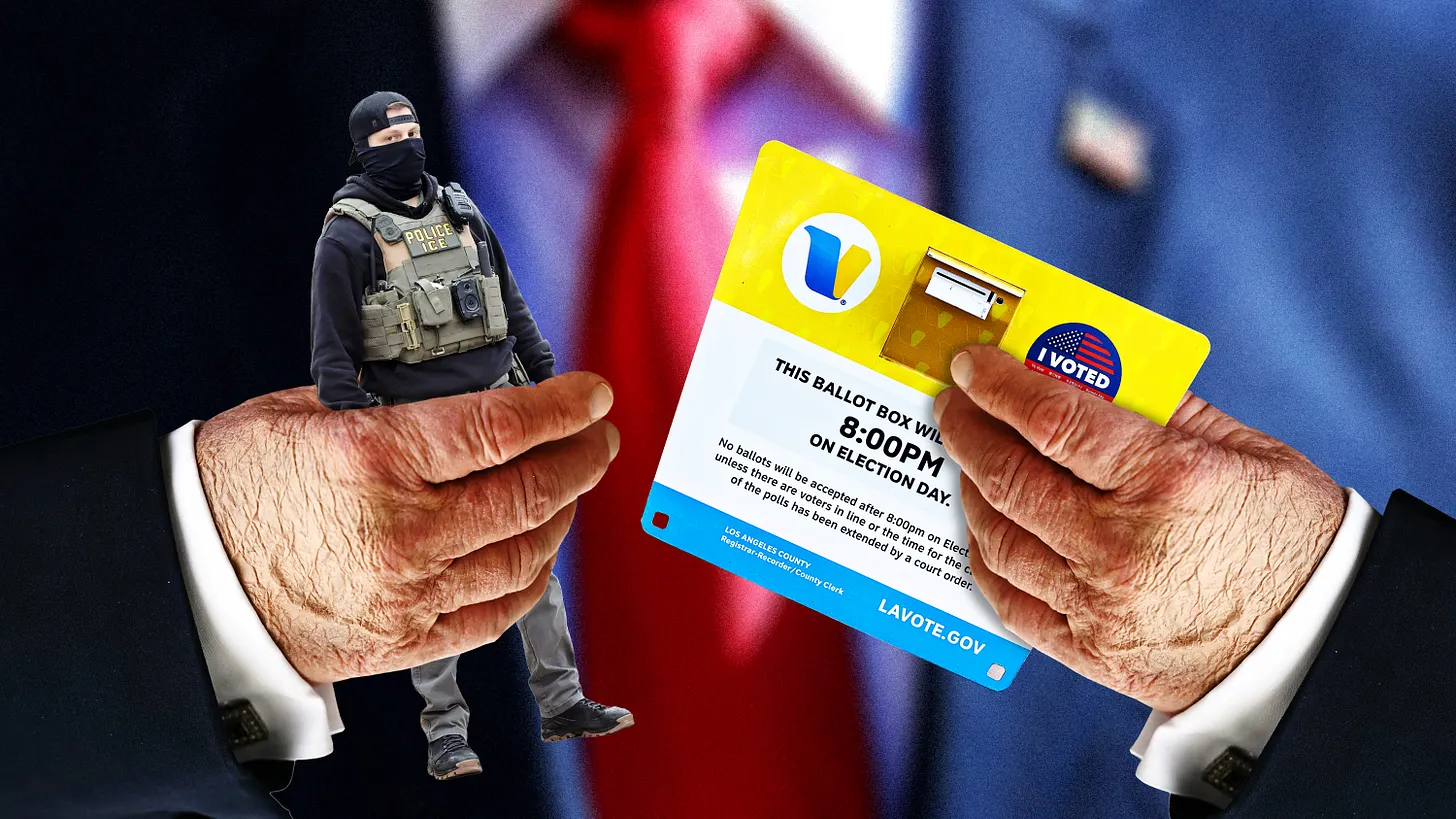
Inside the Wargaming to Foil Trump’s Election Meddling
November 1, 2026
THEY FLEW IN FROM AROUND THE COUNTRY: Some 250 lawyers, policy experts, communication staffers, and other leaders from the American Civil Liberties Union huddled in a hotel conference room in Philadelphia last April trying to figure out what to do if American democracy goes to shit.
For two and a half days, the group walked through twenty-five variations on how Donald Trump and his allies might mess with the midterm elections. The scenarios ranged from Trump casting doubt on the results without evidence, to interference from the Justice Department, to the deployment of ICE or the National Guard at the polls, to the refusal by Republican leaders in Congress to seat Democratic victors.
Such hypotheticals had been discussed publicly and privately before. What the ACLU was trying to do at that gathering was to wargame what effective responses would look like—and to explore a more uncomfortable question: What if no response comes together?
The participants wrote up mock press releases and came up with advocacy, legal, and organizing game plans. They made state-specific plans and worked through who, in each scenario, would be their first call: the state attorney general, the election director, or some other figure.
Lending a feeling of urgency to the proceedings was some breaking news: As the participants worked through the scenarios, the Supreme Court announced its ruling gutting Section 2 of the Voting Rights Act. ACLU officials told me that while they weren’t surprised by the ruling, they were caught off guard by how quickly Republican-controlled states rushed to carve up the electoral power of black voters in the South—underscoring the importance of the work they were doing.
And one other theme emerged as the conference went on: More than in any previous election, this year’s midterms would be contested in states with known election deniers in positions of power over election administration.
“It’s hard to imagine that these people who have gone to such trouble, to such lengths, to try to take power, are going to just peacefully accept the results,” Deirdre Schifeling, the ACLU’s chief political and advocacy officer, told me.
“We are prepared on all fronts,” Schifeling said.
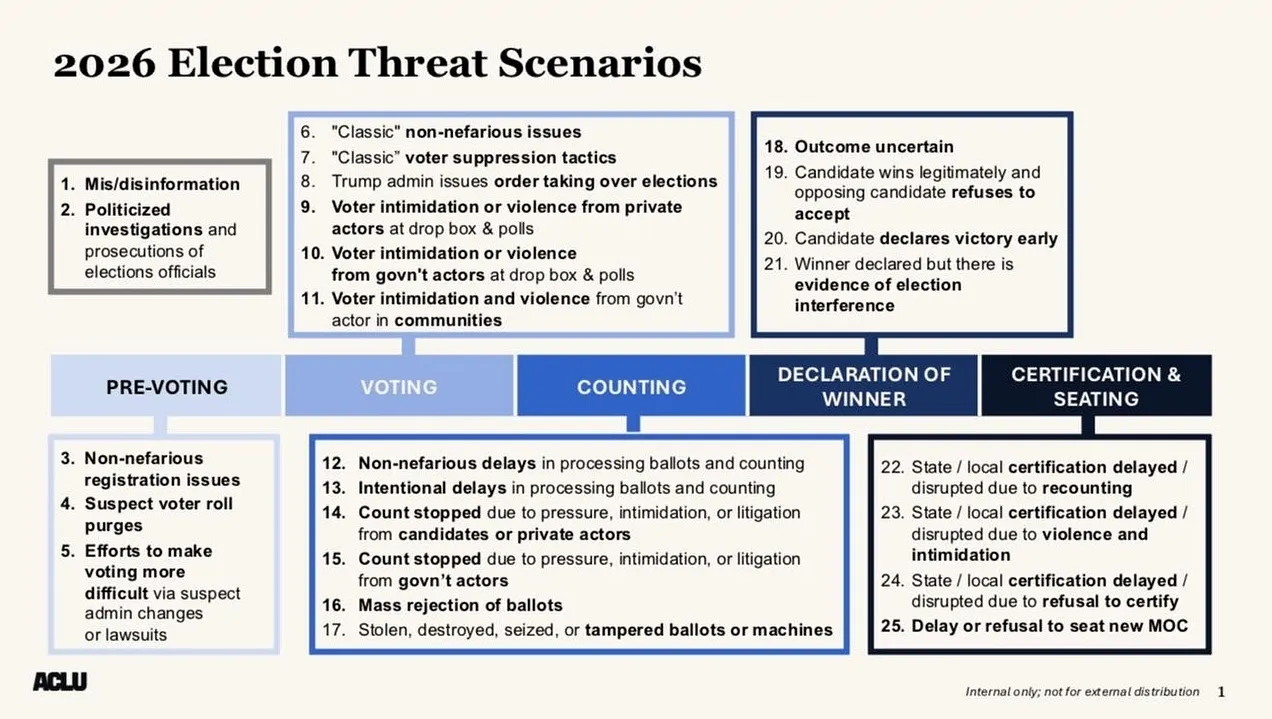
The ACLU is not the only pro-democracy organization that has been engaged in this type of preparation in the leadup to the midterms. In fact, in nearly a dozen conversations with officials at civil-society groups and Democratic-aligned organizations this week, it became clear that quietly, behind the scenes,